Category: Tax Services

  • New VAT Changes in Nigeria: Key Insights from the 2024 VAT Modification Order

    New VAT Changes in Nigeria: Key Insights from the 2024 VAT Modification Order

    The Federal Government of Nigeria has recently issued the “Value Added Tax (Modification) Order, 2024”, which took effect on 1 September 2024. This modification brings significant changes to Nigeria’s Value Added Tax (VAT) landscape, particularly aimed at promoting clean energy solutions and technological advancements.

    It introduces new VAT exemptions for equipment, services, and infrastructure related to alternative fuels, electric vehicles, and renewable energy. These changes are designed to foster sustainable development and drive the transition towards cleaner, more efficient energy systems across various sectors.

    We discuss below the changes introduced and what taxpayers in Nigeria should know and do.

    Summary of Key Changes in the VAT Landscape:

    1. New Exemptions for Clean Energy and Technology-Related Goods:
    The order expands VAT exemptions to include equipment and infrastructure related to clean and alternative energy solutions. This covers:

    • Compressed Natural Gas (CNG) and Liquefied Petroleum Gas (LPG) equipment, including conversion kits.
    • Domestic Liquefied Natural Gas (LNG) processing facilities and equipment.
    • Electric vehicles and their components, including parts and semi-knock-down units for assembly.
    • Biogas and biofuel equipment, emphasizing clean cooking and transportation.

    2.  Promotion of Electric and Dual-Fuel Vehicles
    VAT exemptions have been extended to a variety of vehicles that use alternative fuels, including electric vehicles and dual-fuel vehicles (CNG/LPG). This includes:

    • Electric vehicles (EVs) and components like batteries and solar charging systems.
    • CNG/LPG dual fuel vehicles, CNG cylinders, and conversion kits.
    • Parts for assembling electric vehicles, buses, and other mass transportation vehicles with clean energy alternatives.

    3.  Inclusion of Specific Manufacturing and Service-Related Activities:

    • The modification explicitly exempts services related to the installation and conversion of CNG and LPG equipment, along with the manufacturing, assemblage, and sale of electric vehicles. This change is designed to encourage the production and adoption of clean energy transportation solutions.

    4. Extended Exemptions for Industrial and Agricultural Equipment:

    • Several industrial and agricultural machines are also included under VAT exemptions, such as gas generators, LNG vaporizers, cryogenic storage tanks, biogas digesters, fermentation tanks, and dryers for biofuel processing.

    5. Emphasis on Clean Energy Infrastructure Development:

    • Infrastructure like electric vehicle charging systems, biogas compressors, gas pipelines, and related accessories have been added to the VAT-exempt list, underlining Nigeria’s focus on expanding clean energy infrastructure.

    Implications for Taxpayers and Businesses:

    1.  Transition Opportunities for Manufacturers:

    • Manufacturers can benefit from the VAT exemptions on alternative fuel vehicle parts and related clean energy equipment. Companies producing or assembling electric vehicles, CNG, and LPG infrastructure should explore these opportunities to scale their operations, leveraging lower tax burdens to enhance profitability.

    2.  Businesses Engaged in Clean Energy and Alternative Fuels:

    • Firms involved in the installation, distribution, or conversion of clean energy equipment will find it more cost-effective to expand these services. Lower VAT burdens on equipment like CNG/LPG conversion kits, electric vehicle parts, and biogas units will make it feasible to offer competitive prices, fostering wider adoption.

    3. Potential Tax Planning and Compliance Adjustments:

    • Businesses must adjust their tax planning and compliance processes to account for the updated list of VAT-exempt products. Companies dealing with logistics, transportation, energy production, and related sectors should review their VAT filings and documentation to ensure compliance with the new regulations.

    4.  Increased Investment in Renewable Energy:

    • The VAT changes align with Nigeria’s broader push towards renewable energy adoption and environmental sustainability. Companies in the energy sector should capitalize on these adjustments by exploring new investments in renewable projects, including biofuel, CNG, LPG, and electric energy systems.

    5.  Clarification Needed for Effective Implementation:

    • The order specifies that relevant agencies, like the Nigeria Customs Service and the Federal Inland Revenue Service, may issue guidelines to facilitate smooth implementation. Businesses are advised to stay updated on any supplementary guidelines that clarify the application of the new VAT rules.

    Recommendations for Businesses:

    1.  Engage in Training and Awareness Programs:

    • Organize workshops to educate stakeholders, including suppliers, clients, and internal teams, about the new VAT changes. This will ensure everyone is well-informed about the products and services that qualify for exemptions.

    2. Tax Strategy Reassessment:

    • Consult with tax professionals to reassess your current tax strategies. Ensure you are maximizing the benefits of the new VAT exemptions and aligning your business operations with the updated regulations.

    3. Stay Updated on Policy Guidelines:

    • Keep track of further announcements from the relevant agencies that may issue guidelines to smooth out the implementation of this VAT modification. Regular updates will help in maintaining compliance and avoiding penalties.

    This VAT (Modification) Order, 2024, introduces significant changes that promote Nigeria’s green economy aspirations. Taxpayers, especially those in the clean energy and transportation sectors, should capitalize on these incentives to enhance their service offerings and market competitiveness.

    Click here to view or download the full copy of the VAT (Modification) Order, 2024.

    Click here to download this newsletter in PDF.

    For enquiries about how these changes might affect your business, tax strategies and plans to adopt or the tax technology updates your business may require in order to proactively align with or manage the new changes, do not hesitate to contact us via email – clients@vi-m.com.



  • The Benefits of Using a Tax Professional for Your Tax Needs

    The Benefits of Using a Tax Professional for Your Tax Needs

    Tax season can be a stressful time for many individuals and businesses. The complexities of tax laws, changing regulations, and the fear of making costly mistakes can be overwhelming. That is where tax professionals come in. Below are some benefits of using a tax professional for your tax needs.

    1. Expertise and Knowledge

    Tax professionals, such as chartered accountants and tax consultants, are experts in the field of taxation. They have a deep understanding of tax laws and regulations, allowing them to navigate the complex tax landscape with ease. This expertise ensures that you receive accurate and up-to-date tax advice.

    1. Minimize Errors and Audits

    Tax professionals are well-versed in tax laws and regulations, which means they are less likely to make errors on your tax return. Filing an error-free return reduces the chances of being audited by tax authorities, saving you from potential headaches, penalties, and fines.

    1. Maximizing Deductions and Credits

    Tax professionals are skilled at identifying deductions and tax credits that you may not be aware of. They can help you take advantage of all available tax breaks, which can lead to significant savings on your tax bill. Their knowledge of tax planning can also help you structure your financial affairs to minimize tax liability in the long term.

    1. Time Savings

    Preparing and filing tax returns can be time-consuming, especially for businesses with complex financial transactions. By outsourcing your tax needs to a professional, you free up your time to focus on your core responsibilities, whether that is running a business or enjoying your personal life.

    1. Personalized Tax Planning

    Tax professionals offer personalized tax planning services tailored to your specific financial situation and goals. They can provide guidance on tax-efficient strategies for investments, retirement planning, and estate planning, helping you make informed financial decisions.

    1. Handle Complex Tax Situations

    If you have a unique or complex tax situation, such as owning multiple businesses, foreign income, or investments, a tax professional can provide specialized expertise to ensure compliance and maximize tax advantages.

    1. Peace of Mind

    Knowing that your tax returns are accurate and in compliance with tax laws provides peace of mind. You can rest assured that your financial affairs are in good hands, reducing stress and anxiety associated with tax-related matters.

    1. Representation in Case of an Audit

    In the unfortunate event of a tax audit, having a tax professional on your side can make a significant difference. They can represent you before tax authorities, handle documentation requests, and ensure that you are treated fairly throughout the audit process.

    1. Continuity and Consistency

    Tax professionals can offer year-round tax support, not just during tax season. This continuity ensures consistent and reliable tax advice throughout the year, helping you plan and manage your finances effectively.

    Conclusion

    Using a tax professional for your tax needs is a wise investment in your financial well-being. Their expertise, attention to detail, and ability to maximize deductions and credits can save you money and reduce the stress associated with taxes. Whether you are an individual taxpayer or a business owner, partnering with a tax professional provides peace of mind and ensures that you are in compliance with tax laws while optimizing your financial situation.

    Vi-M can help take tax stress off you. You may contact us via email – clients@vi-m.com or book/ request for our tax services via www.vi-m.com/tax-services.

  • A Guide to Effective Tax Management – for Nigerian Businesses

    A Guide to Effective Tax Management – for Nigerian Businesses


    Tax management is a critical aspect of running a successful business in Nigeria. Understanding the country’s tax system and implementing effective tax management strategies can help Nigerian businesses optimize their tax liabilities, remain compliant with tax laws, and enhance their financial performance. In this article, we will explore key principles and strategies for tax management in Nigeria.

    1. Familiarize Yourself with Nigerian Tax Laws:
      To effectively manage taxes in Nigeria, businesses must have a solid understanding of the country’s tax laws and regulations. Key taxes that apply to businesses include the Companies Income Tax (CIT), Value Added Tax (VAT), Withholding Tax (WHT), Education Tax, and Personal Income Tax (PIT). Familiarize yourself with the tax rates, filing requirements, and deadlines for each tax. Regularly review the Federal Inland Revenue Service (FIRS) website and seek professional advice to stay updated with any changes in tax laws.
    2. Maintain Accurate Financial Records:
      Accurate financial record-keeping is crucial for effective tax management. Keep detailed and organized records of income, expenses, purchases, sales, and other financial transactions. Use accounting software or engage the services of professional accountants to maintain proper books of accounts. These records will enable you to substantiate claims, accurately calculate tax liabilities, and prepare timely and accurate tax returns.
    3. Understand Tax Deductions and Incentives:
      Nigeria provides various deductions and incentives that businesses can take advantage of to reduce their tax liabilities. For instance, businesses engaged in specific industries or activities may be eligible for pioneer status, which grants them a tax holiday for a specified period. Additionally, businesses that invest in qualifying agricultural, infrastructure, or technology projects may be eligible for investment tax credits or capital allowances. Consult with tax professionals or review the FIRS guidelines to identify and claim available deductions and incentives.
    4. Comply with Withholding Tax Obligations:
      Withholding Tax (WHT) is a significant tax obligation for businesses in Nigeria. It requires deducting a specified percentage from payments made to suppliers, contractors, and service providers and remitting it to the tax authorities. Ensure you understand the WHT rates applicable to various types of payments and comply with the withholding tax obligations. Failure to do so can result in penalties and reputational damage.
    5. Leverage Tax Planning and Timing:
      Strategic tax planning and timing can help optimize tax liabilities for Nigerian businesses. Timing the recognition of income and expenses can impact the taxable profit. Consider deferring income or accelerating expenses to align them with the most favorable tax periods. For instance, delaying the invoicing of customers until the following tax year or prepaying certain expenses before year-end can help reduce the current tax burden.
    6. Stay Compliant with VAT Obligations:
      Value Added Tax (VAT) is levied on the supply of goods and services in Nigeria. Businesses with an annual turnover above N25 million threshold must register with the FIRS and collect VAT from their customers. Ensure you accurately calculate VAT on sales, maintain VAT invoices, and remit the collected VAT to the tax authorities within the specified timeline. Regularly review VAT regulations to stay compliant and avoid penalties.
    7. Engage Professional Tax Advisors:
      Navigating the complexities of Nigerian tax laws can be challenging for businesses. Engaging the services of qualified tax advisors can provide invaluable assistance. Professional tax advisors can help interpret tax laws, identify tax planning opportunities, ensure compliance, and handle tax-related matters efficiently. They can also help with tax audits and disputes, providing peace of mind and minimizing the risk of penalties.

    Conclusion:
    Tax management is a vital aspect of running a successful business in Nigeria. By understanding the country’s tax laws, maintaining accurate financial records, leveraging available deductions and incentives, complying with withholding tax obligations, strategically planning tax timing, staying compliant with VAT obligations, and engaging professional tax advisors, Nigerian businesses can effectively manage their tax liabilities, reduce tax burdens, and enhance their financial performance.

    It is essential for businesses to invest time and resources into understanding and implementing effective tax management strategies. By doing so, they can ensure compliance with Nigerian tax laws while optimizing their tax liabilities. Regularly review tax laws and regulations, consult with tax professionals, and stay updated with any changes in tax legislation. By taking a proactive approach to tax management, Nigerian businesses can position themselves for long-term success and financial stability.

  • Introducing Our New Tax Technology and Taxologist Services for African Businesses

    Introducing Our New Tax Technology and Taxologist Services for African Businesses

    We are excited to announce the launch of our new tax technology and taxologist services, aimed at helping African businesses optimize their tax compliance processes and improve their financial operations.

    As a leading provider of tax solutions (inclusive of tax technology solutions embedded in accounting and ERP systems), serial pioneer of Tax Technology solutions such as Nigeria’s first compendium of tax and related laws (Tax Law Book App in Android and IOS); and Vi-M Tax Assist web application & tax calculators, we understand the unique challenges facing businesses in Nigeria (and Africa), and we have designed our Tax Technology and Taxologist service line to address these challenges head-on.

    The services we offer in this regard include:

    1. Tax Technology Implementation – We develop proprietary tax technology tools to assist businesses and individuals manage their tax/ finance functions. In addition, we offer customised tax solutions to our clients beginning from assessing our clients’ current tax technology infrastructure, identifying gaps and opportunities for improvement. Based on this assessment, we develop and implement a customized solution that best meets your needs. This includes implementing new tax software, automation tools, or analytics platforms to help streamline your tax processes as may be required. Our tax technology implementation service also includes implementing tax technology solutions such as accounting software, ERP systems, tax automation software (including payroll software), and tax research tools to streamline our clients’ tax processes.
    2. Tax Data Management: We provide solutions to help our clients manage and maintain tax data, including data warehousing, analytics, and reporting. This will not only help companies gain better insights into their tax positions and make informed management decisions; but will also help businesses to seamlessly comply with the tax data submission requirements of the various tax authorities in the country.
    3. Tax Process Optimization: We work with our clients to optimize tax processes, identifying opportunities for automation and streamlining. This includes developing processes for tax reporting, filing, and auditing, as well as risk management and mitigation strategies.
    4. Tax Compliance Consulting: We offer a range of tax compliance services, including tax return preparation and filing, tax research, and audit support. 
    5. Tax Technology Training: We offer training and educational services to help our clients stay up-to-date on the latest tax regulations, laws, and trends. This includes training on any new in-house tax software deployed by the business or tax software deployed by the tax authorities (e.g TaxProMax and its updates, etax.lirs.net, etc. ), automation tools, or analytics platforms. 
    6. Tax Process Outsourcing: We provide outsourcing services for tax processes, such as tax return preparation and filing, particularly as the TaxProMax and other tax platforms are getting more complex and requiring more time and expertise to complete; allowing our clients to focus on their core business activities.
    7. Tax Strategy Development: We help businesses develop tax strategies that are aligned with their business goals, and which take into account changing regulations and tax laws.
    8. Tax Risk Management: We provide consulting services to help companies assess and mitigate tax risks, including compliance risks, reputational risks, and financial risks. We also offer tax risks management in new divestments, mergers and acquisitions of businesses.

    We believe that these services can help African businesses reduce risk, increase efficiency, and improve their bottom line.

    As a valued client, we would like to offer you an exclusive opportunity to learn more about our new service line and how it can benefit your business. We are offering a complimentary consultation with one of our tax experts, who will be happy to answer any questions you may have and provide you with a customized solution tailored to your specific needs.

    To schedule your consultation, simply send an email to clients@vi-m.com with your preferred date and time, and one of our representatives will be in touch to confirm.

    To learn more about how our Tax Technology and Taxologist Services can benefit your business, please read our blog posts in this category – https://vi-m.com/category/tax-technology/

    Thank you for your continued partnership with us, and we look forward to working with you to achieve your tax compliance and financial goals.

  • FIRS Issues Public Notice, Demanding the Submission of Certificate of Acceptance of Fixed Assets (CAFA) by Companies

    FIRS Issues Public Notice, Demanding the Submission of Certificate of Acceptance of Fixed Assets (CAFA) by Companies

    In its Public Notice of 9 May 2022 (view here), the Federal Inland Revenue Service (FIRS), is demanding the following of Nigerian Companies:

    1. All companies that enjoyed or claimed Capital Allowances on Qualifying Capital Expenditure (QCE) (of N 500,000 and above), between 2016 and 2021 years of assessment, are to submit, on or before 31 October 2022, the Certificate(s) of Acceptance of Fixed Assets (issued by the Industrial Inspectorate Division of the Federal Ministry of Industries, Trade and Investment), to the tax office where the company’s tax file is domiciled. Failure to do so, the FIRS may withdraw the capital allowances enjoyed by the company, for the above-mentioned tax years, and levy additional income taxes as a consequence of withdrawal of the tax allowance.
    • Henceforth, every company is to submit its Certificate(s) of Acceptance in respect of QCE (of NGN500,000 and above) incurred in each year of assessment.

    Notes:

    In simple language, ‘Capital Allowance’ is an allowance or allowable deduction from assessable profits, granted by the Companies’ Income Tax Act (CITA) in lieu of ‘Depreciation of fixed assets’ which is not allowed as deduction from assessable profits while computing companies’ income tax. 

    By law, the following conditions must be met by a company before capital allowances can be claimed by the company:

    • The company or taxpayer must own the asset
    • The company must have incurred the qualifying capital expenditure wholly, exclusively, reasonably, and necessarily for the purpose of its trade or business.
    • The asset must be in ‘use’ for the purpose of the trade or business at the end of the financial year/ tax basis period.

    Capital Expenditure is termed ‘Qualifying Capital Expenditure’ (QCE) if they meet all the criteria above, for grant of Capital Allowance.

    In Practice over the years, the taxpayer is required to present a Certificate of Acceptance of Fixed Assets (CAFA) issued by the Federal Ministry of Industries, Trade, and Investment, in respect of assets acquired for N500,000 and above (in each asset category), to prove that it had indeed incurred the Capital Expenditure for ‘use’ by the business. 

    CAFA is not specifically required by the tax laws as a condition for claim of Capital Allowance. In Practice, where Certificate of Acceptance was not available, provision of purchase invoices for the fixed assets had sufficed as proof of acquisition and company’s ownership of the assets.

    The FIRS is however, deriving its authority to make this demand for submission of Certificate Acceptance, from Section 5(1) of the Industrial Inspectorate Act, Section 26 of the Federal Inland Revenue Service (Establishment) Act (FIRSEA) and Section 60 of the CITA.

    Considering the huge cost and significant time it takes to process Certificate of Acceptance, it is our hope that the FIRS would not enforce this directive, particularly in the area of withdrawing or denying grant of Capital Allowances, because this has no legal basis and would constitute significant additional tax compliance burden on already over-tasked Nigerian companies. 

    For more enquiries, or for help with understanding or reviewing your business for the need for Certificate of Acceptance of Fixed Assets (CAFA) or even processing of the CAFA, please contact us via clients@vi-m.com.

  • FIRS Public Notice: Treasury Bills, Other Government Securities and Bonds Are No Longer Exempt from Companies’ Income Tax

    FIRS Public Notice: Treasury Bills, Other Government Securities and Bonds Are No Longer Exempt from Companies’ Income Tax

    Effective 2 January 2012, former President Goodluck Jonathan signed into law, the Companies Income Tax (Exemption of Bonds and Short-Term Government Securities) Order, 2011. This Act exempted the following instruments and interests earned from them, from companies’ income tax, for a period of 10 years:

    1. Short Term Federal Government of Nigeria Securities, such as Treasury Bills and Promissory Notes
    2. Bonds issued by Federal, State and Local Governments and their Agencies
    3. Bonds issued by corporate bodies including supra-nationals

    This 10-year exemption period recently expired on 1 January 2022. The 10-year period limitation did not apply to bonds issued by the Federal Government, which, according to the law, shall continue to enjoy such exemption.

    Recently, the Federal Inland Revenue Service (FIRS) also issued a Public Notice to remind the general taxpaying public, particularly companies that invest in treasury bills, bonds, and other government securities about the expiration of this tax exemption period. 

    Companies investing in treasury bills, bonds, and other government securities (apart from bonds issued by the Federal government) should please be aware of this expiration of income tax exemption and make adequate provision for the tax impact (including withholding tax at source) of these investments and any interests earned from them, from 2 January 2022.

  • Tax Filing Deadline

    Tax Filing Deadline

    Wednesday, 30 June 2021, is the deadline for Nigerian companies with financial year end of 31 December 2020 to file their income tax returns. 

    Such companies are expected to:

    1. Prepare their companies’ income tax computations.

    2. Prepare audited financial statements (companies making annual gross turnover of N100m or less, may not be required to audit the financial statements – draft accounts may be accepted).

    3. Apply for taxpayer update on Federal Inland Revenue Service (FIRS)’ e-filing portal (if not done already) – to allow the company access to e-filing and other FIRS’ e-services.

    4. File companies’ income tax returns and the accompanying financial statements via the FIRS’ online TaxPro MAX platform before 30 June 2021.

    5. Make tax payment with the ‘Document Identity Number’ (DIN) generated from the TaxPro MAX platform on or before the same deadline date.

    For companies making annual gross turnover of N25m or less, they will not be required to pay companies income tax as long as they complete their income tax filing before this deadline (they are required to file income tax returns but exempted from paying the tax).

    We (Vi-M Professional Solutions) can assist any Nigerian company get the income tax filing done or assist with navigating the FIRS’ digital platform, but please contact us as soon as possible as the deadline is just few weeks away.

    Email clients@vi-m.com, call or chat with us on WhatsApp number +234 810 793 0666 to get started.

    *Please also note that following the recently signed Institute of Chartered Accountants of Nigeria (ICAN)/ Association of National Accountants of Nigeria (ANAN) vs Chartered Institute of Taxation of Nigeria (CITN) Memorandum of Understanding, only CITN members with valid Practicing Licences can help clients file tax returns for a fee, with effect from 1 August 2021. On this backdrop, all companies / businesses are advised to please enquire from their tax consultants about their CITN issued practicing licences.

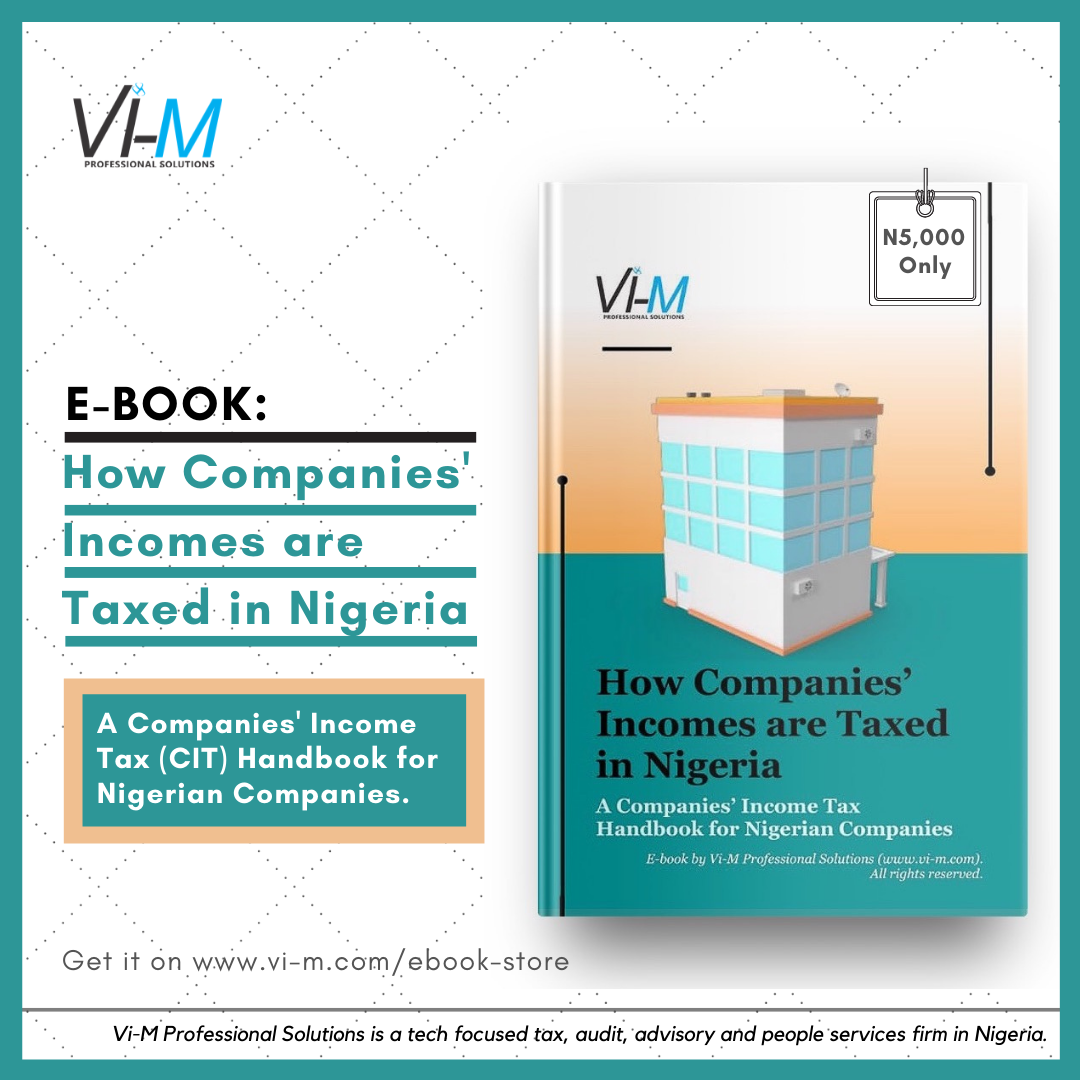
    For those who may want to ‘do it themselves’, our ebook on ‘How Companies’ Incomes are Taxed in Nigeria‘, provides  the necessary technical guidance.

    This ebook can be purchased and downloaded from www.vi-m.com/ebook-store.

  • FIRS ISSUES PUBLIC NOTICE TO ANY PERSON WHO DISPOSED CHARGEABLE ASSETS TO FILE CAPITAL GAINS TAX (CGT) RETURNS

    FIRS ISSUES PUBLIC NOTICE TO ANY PERSON WHO DISPOSED CHARGEABLE ASSETS TO FILE CAPITAL GAINS TAX (CGT) RETURNS

    The amendment to the Capital Gains Tax Act, by the Finance Act 2020 mandates every person who disposed a chargeable asset to compute the Capital Gains Tax, file self-assessment returns and pay the tax computed thereon.  This amendment came into effect from 1st January 2021.

    Hence, the FIRS has issued a notice on 31st March 2021 to all taxpayers (companies, partnership, executors, trustees, community, families or individuals), tax practitioners and the general public as follows:

    • The Capital Gains Tax Act (CGTA) (as amended) mandates every person who disposes a chargeable asset to bi-annually compute the Capital Gains Tax, file self-assessment returns and pay the tax computed, in respect of the chargeable assets disposed, to the relevant tax authority.
    • The due date of filling for Capital Gains Tax returns and payment of Capital Gains Tax is the earlier of 30th June and 31st December immediately following the disposal.
    • As such, any taxpayers having disposed a chargeable asset is required to compute the Capital Gains Tax, file self-assessment return and pay the tax in respect of the following chargeable assets:

    a. Chargeable assets disposed from 1st January in a year to 30th June of that year, not later than 30th June

    b. Chargeable assets disposed from 1st July to 31st December each year, not later than 31st December

    c. Chargeable assets disposed prior to the coming into effect of Finance Act 2020, not later than 30th June 2021

    FIRS cautions that any tax due and unpaid by the due date shall attract interest and penalties as provided in the enabling legislation.

    Click here to view the FIRS Publication.

    For further clarifications or professional assistance in connection to this subject, please contact Vi-M Professional Solutions on clients@vi-m.com or www.vi-m.com.

  • FIRS ISSUES PUBLIC NOTICE TO ALL APPROVED ENTERPRISES OPERATING IN THE FREE TRADE ZONES, EXPORT PROCESSING ZONES AND OIL AND GAS FREE ZONES TO FILE INCOME TAX RETURNS

    FIRS ISSUES PUBLIC NOTICE TO ALL APPROVED ENTERPRISES OPERATING IN THE FREE TRADE ZONES, EXPORT PROCESSING ZONES AND OIL AND GAS FREE ZONES TO FILE INCOME TAX RETURNS

    The Federal Inland Revenue service (FIRS) on the 30th of March 2021, issued a public notice in accordance with Section 18 (1) of the Nigeria Export Processing Zones Authority (NEPZA), and the Oil and Gas Free Zone Authority (OGFZA) Acts as amended by section 58 and 59 of the Finance Act 2020, which came into effect 1st January 2021.

    The notice has been given by the FIRS to all enterprises registered and operating in the Nigeria Export Processing and Oil & Gas Free Zones (the zones), tax practitioners and the general public asserting that:

    The NEPZA Act and OGFZA Act (as amended) mandates all enterprises registered and operating in the zones to file income tax returns in accordance with the provisions of the Companies Income Tax Act (CITA).

    Hence, all enterprises registered and operating in the zones are required to:

    1. to file income tax returns for 2021 and subsequent years of assessment; and
    2. to compute income tax and pay the tax due (if any)

    The returns should be in the manner and time as specified by CITA.

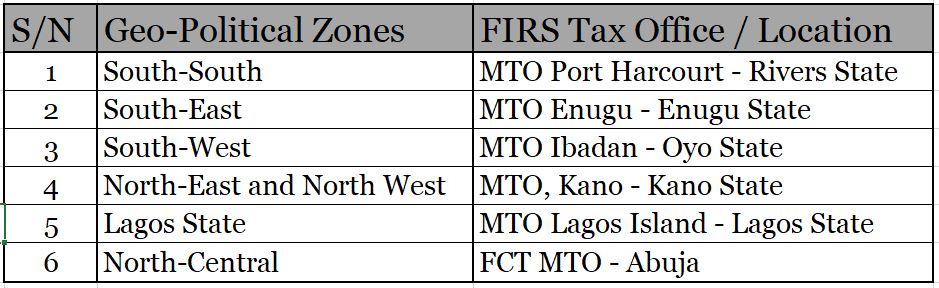
    To allow for ease of compliance, FIRS has further highlighted / directed that enterprises operating in the relevant “Geo-Political Zones” are required to file their income tax returns in the respective FIRS offices as indicated below:

    The publication also reiterates that relevant penalties prescribed by CITA or Federal Inland Revenue Service (Establishment) Act of 2007 shall apply to any company that fails to comply with the filing requirements as regards due dates.

    Click here to view the FIRS Publication.

    For further clarifications or professional assistance in connection with your filing requirements, please contact Vi-M Professional Solutions on clients@vi-m.com or www.vi-m.com.